McKinsey reports that 70 per cent of digital transformation initiatives fail to meet their objectives, and AI projects are closer to 87% failure;1 a Gartner survey found that only 48 per cent meet or exceed their targets.2 Globally, failed transformation efforts cost businesses an estimated $2.3tn a year.3 In many of these cases, failure has little to do with strategy, and everything to do with execution.4
Your Initiatives Deserve Success
You went live six months ago. The system works. Adoption is poor.
Your AI initiative has a vendor, a timeline, and a budget. What is doesn’t have is a clear picture of whether your people and processes are ready for it.
You brought in an implementation partner. They built what you asked for. Now you’re three years in and every upgrade is a project because of the customizations nobody planned for.
Your team is smart and working hard. They’re also running legacy systems and processes built when you were half your size.
You’ve built the strategy – let’s build the execution together
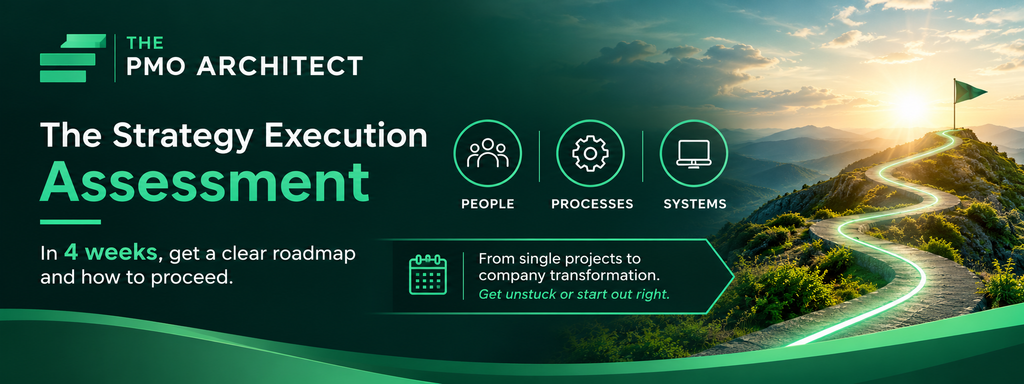
4 weeks. $25k. A roadmap, execution tools, people plans, and more.
Week 1: Dive into your business model, your industry, your customers. Review your corporate goals, strategy for growth or change, and key KPIs.
Week 2: What’s the project, initiative, or transformation, and what does your data say now. Review past challenges or failures, surface current issues or blockers.
Week 3: People, process, systems – how is your business running now, including any hidden spots of caution. Assess interest and capacity of team members for change.
Week 4: Recommendations across process improvements, project method(s), adoption plan, people needs (roles, training). 2 day workshop together on best execution timeline, ownership, and more. Ends in final Roadmap.
What next?
Dropping a PowerPoint deck and disappearing isn’t my style – but neither is upselling for work you don’t need. We discuss “what next” in our workshop to find the right fit for you. That could look like:
- Project leadership – from building a full PMO including tools, templates, and workflows, to upskilling your current project leaders based on specific needs, to recommending experienced people for your on-going needs.
- Change and adoption – change management office, sure, but building adoption tools within your current or new project methods is my preferred way to go. Full ADKAR or lightweight template-driven method.
- Value, Transformation, Improvement – building on Lean Six Sigma principles, we can set your people up for success. Full belting program with on-going Master Black Belt advisory, or simplified data-drive value and change tools.
- Fractional advisory – on-going or as-needed oversight, roadmap review and update, and more.
1 McKinsey, Common pitfalls in transformations: A conversation with Jon Garcia
2 Priorities CIOs Must Address in 2025 | Insights from the 2025 Gartner CIO Survey
3 https://newsroom.taylorandfrancisgroup.com/costly-business-overhauls-are-not-needed-to-embrace-new-digital-technologies-according-to-specialist/.
4 70 per cent of transformation projects fail – and everyone’s ignoring the same fix – Financial Times – Partner Content by TeamViewer